AI in Japan: Transforming the Workforce Landscape
Introduction
In recent years, Japan has turned to Artificial Intelligence (AI) to address one of its most pressing challenges: labor shortages in a rapidly aging society. With demographics shifting and the working-age population declining, AI in Japan has become a crucial component in maintaining economic stability and promoting growth. The integration and expansion of AI and robotics in the workforce are not merely innovations; they are necessities. This blog examines how AI is transforming the Japanese labor landscape, addressing personnel gaps, and setting the stage for future advancements.
Background
Japan is experiencing significant demographic shifts, characterized by a falling birth rate and an increasing number of retirees. Such trends have placed immense pressure on the labor market. By 2040, the working-age population is anticipated to decrease by nearly 15 million, creating discrepancies in various industries (link). To counter these challenges, the Japanese government has implemented initiatives to foster AI technology adoption, particularly in the physical AI sector, which focuses on deploying robots and AI systems in physical and interactive roles. Statistics reveal that Japanese manufacturers represented approximately 70% of the global robotics market in 2022, highlighting the nation’s leadership in leveraging technology to resolve labor shortages.
Trend
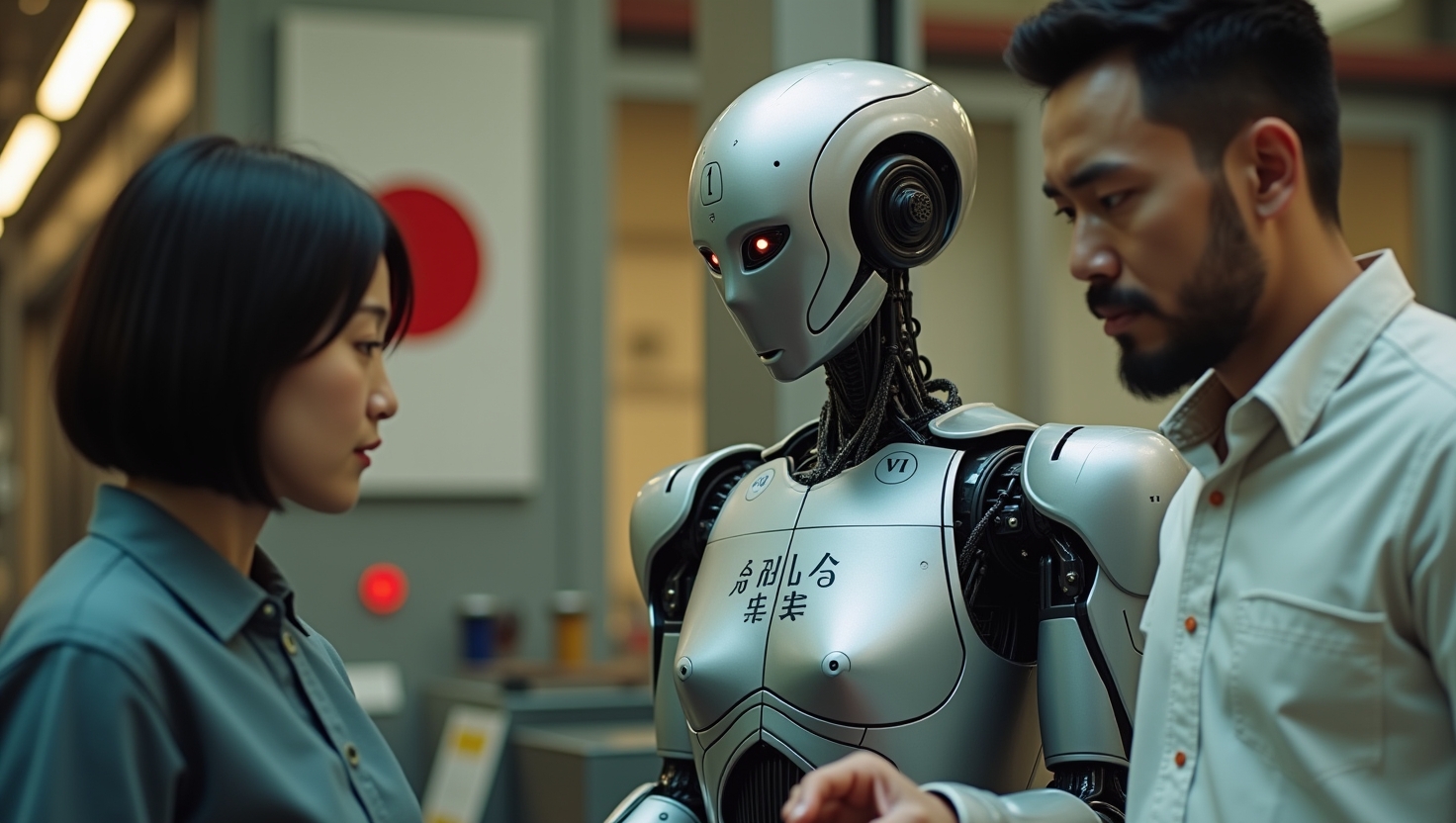
The trend of embracing a robot workforce is evident across multiple sectors in Japan. Companies like Mujin, SoftBank, and Toyota are at the forefront, pioneering innovation in AI-driven automation. These corporations have revolutionized manufacturing and services by introducing advanced robotics systems capable of performing complex tasks. Physical AI, encompassing AI-powered robots working alongside human counterparts, simplifies manufacturing processes, enhances healthcare delivery, and automates logistics operations. As automation technology matures, sectors like agriculture and elder care are seeing accelerated adoption rates, showcasing how AI is reshaping traditional roles.
Insight
Adopting AI technologies profoundly impacts Japanese businesses and the broader economy. Industry leaders recognize AI’s potential to combat labor shortages while sustaining high productivity levels. The Japanese Ministry of Economy projects that by 2040, the country will secure 30% of the global physical AI market share (link). The integration of AI is not only digitizing traditional roles but redefining them, offering a new paradigm for workplace innovation. For instance, AI’s role in manufacturing can be likened to the steady advance of an assembly line, gradually augmenting human capacities and optimizing efficiency without replacing the invaluable human touch altogether.
Forecast
Looking toward the future, AI’s role in Japan’s workforce is set to expand significantly by 2040. A significant shift towards a technology-driven economy is anticipated, characterized by increased adoption of automation technologies and potential revisions in employment legislation to accommodate these changes. The continued development of physical AI systems will not only aid in addressing labor shortages but will also position Japanese companies as pivotal players on the global AI and robotics stage. As businesses adapt to these changes, they may also shape the international discourse on AI ethics, development, and integration.
Call to Action
The time is ripe for businesses and innovators to embrace the evolving landscape shaped by AI. As technology advances, understanding and integrating AI technologies becomes crucial for maintaining a competitive edge. We encourage readers to stay informed about these developments and consider how automation can enhance efficiency within their operations. To deepen your engagement, follow the pioneering work being done in Japan’s AI sector or explore resources on incorporating AI solutions into your business strategies.
For further reading, consider this insightful article on Japan’s AI strategies: \”Japan is proving experimental physical AI is ready for the real world\”.